$20.00
We will hold your cart for 15:00.
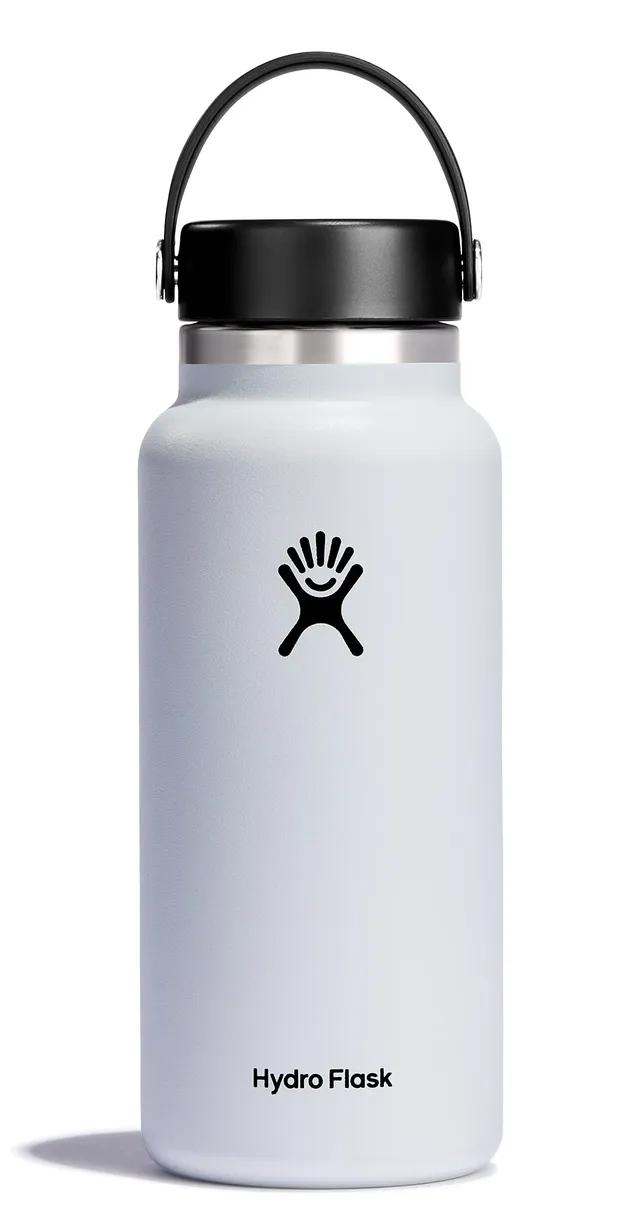
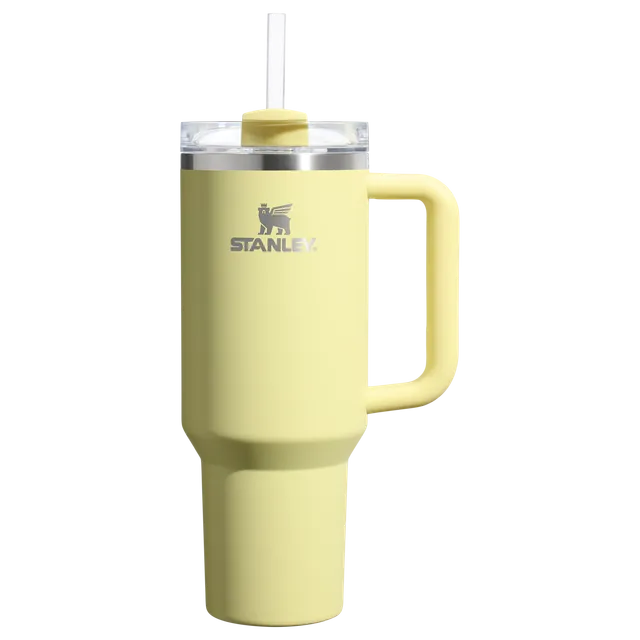
Here's a trick question: your insulated water bottle isn't really keeping your drink cold. It's keeping heat out. That's not a semantic quibble — it's the entire design brief behind every double-wall stainless steel bottle on this site, from a Hydro Flask Wide Mouth 32 oz to a 40 oz Stanley Quencher.
Most people pick a bottle based on color, capacity, or whether it fits a cup holder. All fair. But if you've ever wondered why one brand claims 24 hours of cold and another says 40, or why your bottle suddenly stopped performing after three years, the answer comes down to one technology: vacuum insulation. Let's open it up — metaphorically, because the whole point is that you can't.
Heat moves three ways: conduction (touch), convection (air currents), and radiation (infrared energy). An insulated bottle attacks all three, but it kills the first two with a single move: it removes the air between two walls of stainless steel.
The bottle is actually two bottles. An inner vessel holds your drink. An outer shell is what your hand touches. Between them is a gap that manufacturers pump the air out of and seal — a vacuum. And a vacuum is, by definition, the absence of matter. No air molecules means no conduction and no convection across the gap. Your iced water can't hand its coldness to the outer wall, because there's almost nothing in between to carry it.
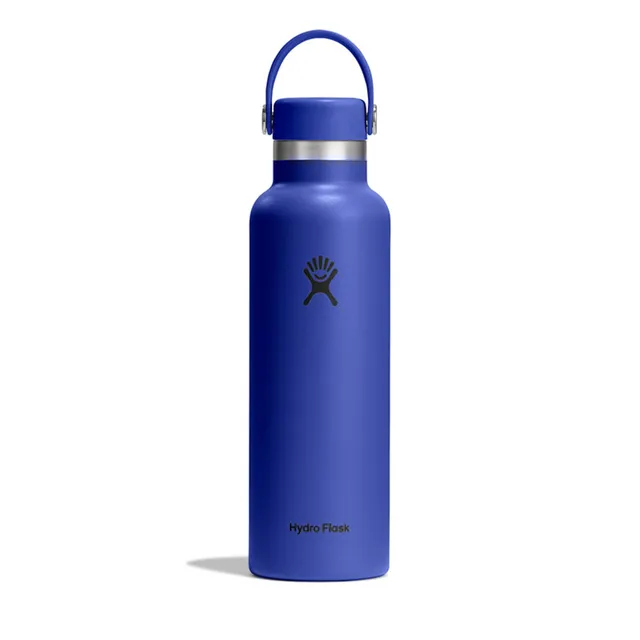
What's left is radiation, which is why better bottles add a reflective copper or stainless lining to bounce infrared energy back. Hydro Flask wraps this whole system in what it calls TempShield double-wall insulation — its branded name for exactly this two-wall, vacuum-sealed, radiation-reflecting construction. Stanley uses the same fundamental vacuum insulation across the Quencher, IceFlow, and Classic lines; the brand's been building insulated steel gear since 1913, and the principle hasn't changed. The engineering around it has.
Hydro Flask rates its Wide Mouth line at 24 hours cold, 12 hours hot. Stanley's Quenchers and IceFlow jugs claim up to 40 hours of ice retention on certain sizes. Before you conclude one is "better," understand what those numbers actually measure.
Insulation performance scales with three things:
So the honest answer to "how long does Hydro Flask keep drinks cold" is: about 24 hours in real-world conditions for the Wide Mouth line, longer if you start with more ice, and noticeably longer in the larger capacities. Stanley's bigger formats buy extra hours with extra mass.
This is the part most explainer articles skip, and it's the part that actually matters to your daily use.
Look at a cross-section of any insulated vessel and you'll see the walls are ~1.5–3 mm apart with vacuum between them — but the lid sits on a full ring of solid steel-to-steel contact. Plastic gaskets, straw channels, flip hinges: all of it conducts heat far better than a vacuum (plastic is roughly a million times more conductive than empty space, for the record).
Practical consequences:
Less than the marketing suggests. Both brands use food-grade 18/8 stainless steel, double-wall vacuum sealing, and radiation-reflective linings. Both are BPA-free. The real differences are in form factor and lid ecosystems:
If you're choosing between them for insulation alone, choose by size and lid type, not brand. A 40 oz straw tumbler from either brand behaves remarkably similarly. A 32 oz Hydro Flask Wide Mouth will outlast either brand's straw tumbler simply because its lid is better sealed.
Vacuum seals can fail — a dent that bridges the walls, a cracked weld, a hard drop. When that happens, the bottle still works as a cup, but it stops working as a thermos. Here's how to check:
Two things that are not failures: a hot or cold feeling right at the lid (expected — thermal bridge), and a metallic taste (usually a cleaning issue, not an insulation one). If your bottle failed the test, Hydro Flask's limited lifetime warranty covers manufacturing defects including vacuum failure; Stanley's Built for Life warranty works similarly. Dents from drops are usually excluded, which is exactly why a $10 silicone boot is cheap insurance — the Hydro Flask Bottle Boot shields the base, where most wall-bridging dents start.
The spec sheet assumes you help it a little:
And for hot drinks specifically: the same physics runs in reverse, which is why a wide straw cap is wrong for coffee. A dedicated hot vessel like Stanley's Stay-Hot Camp Mug 24 oz pairs a sealed drink-thru lid with the vacuum walls — coffee stays hot for hours and the handle keeps your hand comfortable.
Vacuum insulation isn't magic and it isn't proprietary wizardry — it's a century-old principle executed with modern manufacturing, and every serious brand does it well. What separates a great bottle from a mediocre one in 2026 is the details around the vacuum: lid design, gasket quality, capacity math, and whether the format matches how you actually drink.
Pick your lid for your day, pick your size for your hours, and protect the base. The physics handles the rest.
Orders over $45.00 ship free. Otherwise, shipping is $8.00.
Hassle-free returns
SSL encrypted checkout
100% genuine products
Shop insulated bottles, tumblers, and travel mugs from Stanley 1913 and Hydro Flask, with clear comparisons across 583 options.
Email: support@quenchhaus.shop
Address: 218 Ridgeline Avenue, Suite 4, Portland, OR 97205, United States